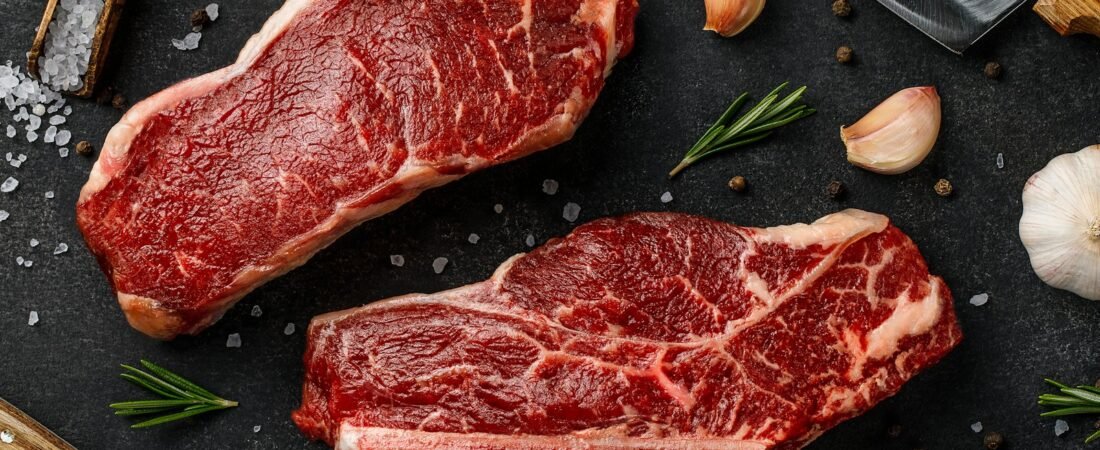
Every night at Steak 38, at least one table asks the same question before the server even finishes reciting the specials: ribeye or New York strip? It’s the classic steakhouse debate, and after decades of cutting, aging, and grilling both, we’ve got some strong opinions on it.
The short answer is that neither cut is objectively better. They come from different parts of the cow, cook a little differently, and reward different kinds of steak eaters. Here’s how to tell them apart, and how to figure out which one belongs on your plate tonight.
Where Each Cut Comes From
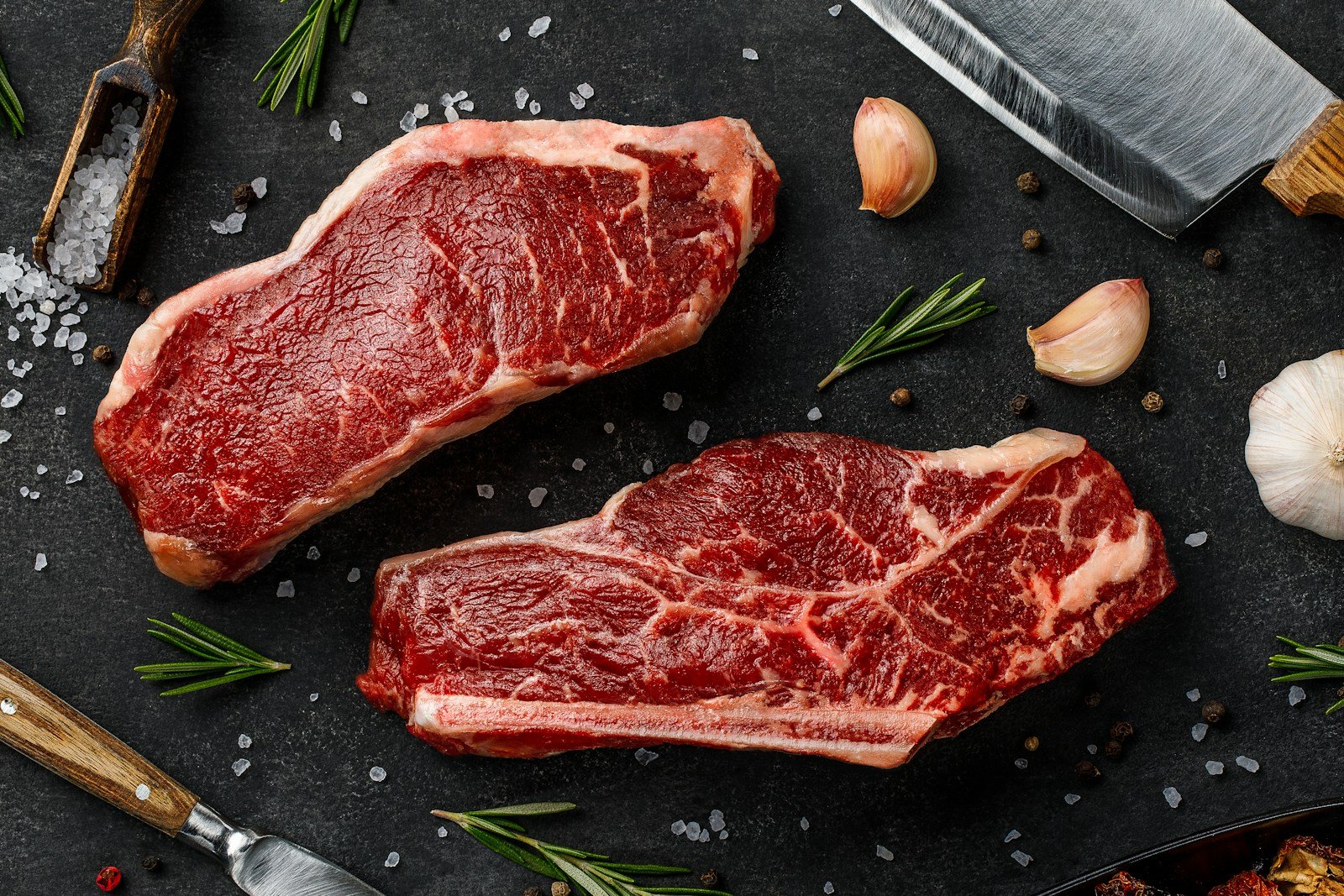
A ribeye is cut from the rib primal, the section that runs along the upper back of the cow between the shoulder and the loin. This muscle does very little work, which is exactly why it stays so tender and why it carries so much intramuscular fat, the white streaks and flecks butchers call marbling.
A New York strip comes from the short loin, just behind the ribs. It’s also a low-effort muscle, so it’s naturally tender too, but it carries noticeably less fat than the ribeye. That single difference in fat content is the root of almost everything else that separates these two steaks.
What Ribeye Tastes Like
Ribeye is the richer, fattier cut, and it eats that way. As the marbling melts during cooking, it bastes the meat from the inside, which is why a good ribeye tastes almost buttery and stays juicy even a few minutes past its ideal temperature. You’ll also notice the deckle, a looser, extra fatty section near the edge of the steak that regulars sometimes ask us to keep on.
Because of all that fat, ribeye has a deeper, almost sweet beefiness. It’s the cut most people picture when they think “steakhouse steak.”
What New York Strip Tastes Like
Strip steak is leaner and firmer, with a tighter grain. The flavor is more direct, a cleaner, more concentrated beef taste without the same fat coating your palate. There’s still a fat cap running along one side, which is where most of the steak’s richness comes from, but the interior meat itself is lean.
If ribeye is the indulgent choice, strip is the steak for someone who wants to taste the beef itself, not just the fat around it.
Tenderness: How the Two Compare
Both cuts come from muscles that barely get used, so both are naturally tender compared to something like flank or skirt steak. That said, ribeye is usually the more tender of the two, simply because fat is softer than muscle fiber, and ribeye has more of it running through the meat.
Strip steak isn’t tough by any measure. It has a slightly firmer, more defined bite, which some guests actually prefer because it gives the steak a bit more structure instead of falling apart at the fork.
So Which One Is Better?
Order ribeye if you want maximum richness and don’t mind a fattier bite. Order New York strip if you want a leaner steak with a firmer texture and a more straightforward beef flavor. Neither one is the correct answer. It comes down to what kind of steak experience you’re after on a given night.
A rule we tell first timers: if you usually order your burgers well marbled and juicy, go ribeye. If you gravitate toward leaner cuts of meat in general, the strip will probably suit you better.
How We Cook Them at Steak 38
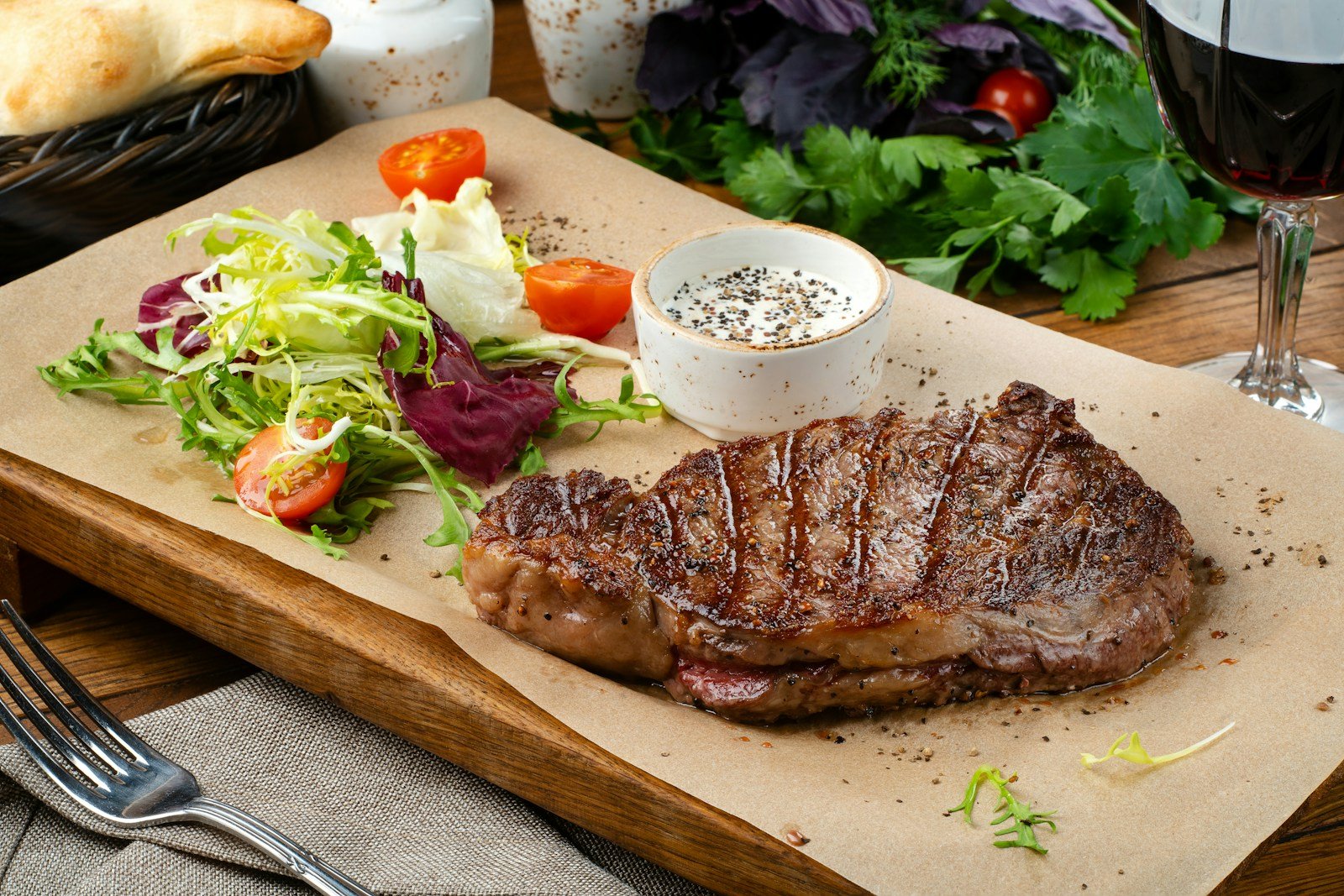
Both cuts get the same high heat sear to build a proper crust, then finish to the temperature you order, whether that’s a warm red center at medium rare or something closer to medium. Because ribeye has more internal fat, it holds up a little better if it goes a few degrees past your target. Strip steak is less forgiving, so we’re more precise with the timing to keep it from drying out.
If you can’t decide, ask your server. We cut and cook both every single night and can steer you toward whichever one fits your mood.
Common Questions
Is ribeye more expensive than New York strip?
Generally, yes. Ribeye tends to run a bit higher due to its higher fat content and demand, though pricing varies by steakhouse and cut size. Check our entrees menu for current pricing on both.
Which cut is leaner?
New York strip is the leaner option of the two. If you’re watching fat intake but still want a full steakhouse cut, strip is usually the better call.
What’s the best temperature to order either one?
We recommend medium rare, around 130 to 135 degrees, for both cuts. It’s the temperature that lets the marbling in a ribeye render properly and keeps a New York strip juicy instead of drying out.
Ready to try both side by side? Reserve your table at Steak 38 in Cherry Hill and see which one wins you over.