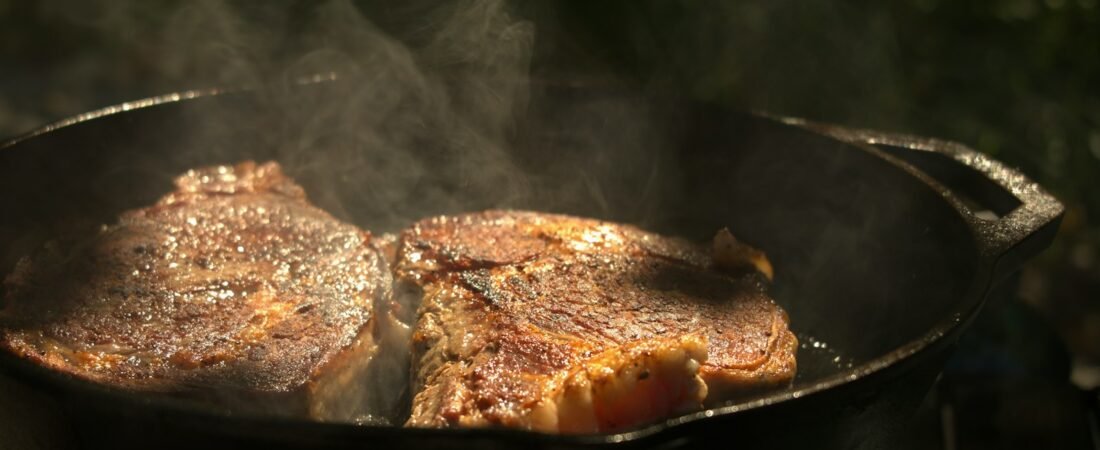
At Steak 38, every steak that leaves our kitchen gets cooked over an open flame. That’s not something you can easily recreate at home unless you’ve got a live-fire grill built into your kitchen. What you can recreate, almost exactly, is the crust. A cast iron skillet gets hotter and holds that heat more evenly than almost anything else in a home kitchen, and it’s the closest thing to steakhouse results you’ll get on a stovetop.
Most people who ruin a steak at home aren’t using bad meat. They’re using the wrong pan, the wrong heat, or pulling the steak off too early or too late. Here’s the method that actually works, step by step, with no guesswork.
Why Cast Iron Works Better Than a Regular Pan
Cast iron holds an enormous amount of heat compared to stainless steel or non-stick pans. When you lay a cold steak into a thin pan, the pan’s temperature drops fast and stays down, which means the meat steams instead of searing. A properly preheated cast iron skillet barely loses temperature when the steak hits it, so you get a real crust in the first thirty seconds instead of gray, sad meat that never quite browns.
It also handles high heat without warping or reacting badly to the fond that builds up on the bottom, which becomes the base of any pan sauce or butter baste you make afterward.
What You Need Before You Start
A steak at least an inch thick, ideally closer to an inch and a half. Thinner steaks cook through before a proper crust has time to form. Kosher salt, a high smoke point oil like avocado or refined canola, a few tablespoons of butter, a couple of smashed garlic cloves, and a few sprigs of thyme or rosemary. A meat thermometer isn’t optional here. Guessing by touch takes years of practice that most home cooks haven’t put in.
Step 1: Bring the Steak to Room Temperature
Pull the steak out of the fridge thirty to forty five minutes before you cook it. A steak straight out of the fridge has a cold center, which means by the time the outside is seared, the inside is still underdone or the whole thing overcooks trying to catch up. Letting it sit out lets the temperature even out from edge to center.
Step 2: Season Heavily and Pat It Bone Dry
Moisture is the enemy of a good crust. Pat the steak dry with paper towels, then season both sides generously with kosher salt. If you have time, salt it up to an hour ahead and leave it uncovered in the fridge. The salt draws out moisture initially, then reabsorbs it back into the meat along with the salt, which seasons it deeper and leaves an even drier surface for searing. If you’re short on time, salting right before cooking still works fine, just make sure the surface is dry.
Step 3: Get the Skillet Screaming Hot
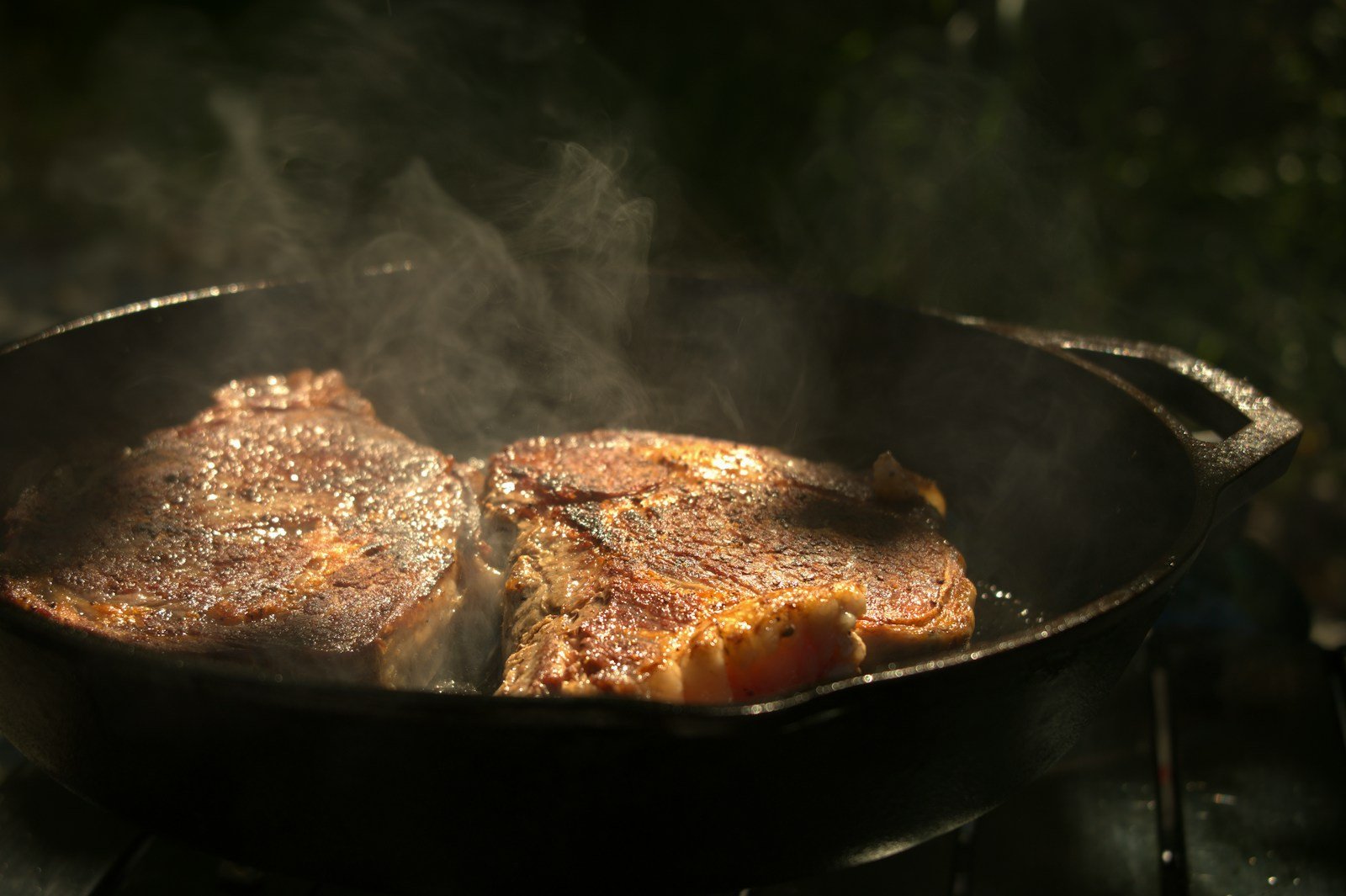
Preheat the empty skillet over medium high heat for a full five to eight minutes. This feels like a long time and it is. A pan that looks hot after ninety seconds is not actually hot enough all the way through the iron. Add your oil right before the steak goes in, not earlier, so it doesn’t break down and start smoking too soon.
Step 4: Sear It and Leave It Alone
Lay the steak away from you so hot oil doesn’t splash back at you, and then don’t touch it. No poking, no peeking, no shuffling it around the pan. Let it sear undisturbed for two to three minutes per side depending on thickness. Moving it around constantly is one of the most common reasons a crust never forms. The steak will release itself from the pan naturally once a proper crust has developed. If it’s sticking hard, it’s not ready to flip yet.
Step 5: Baste With Butter, Garlic, and Herbs
Once both sides have a solid crust, drop in the butter, smashed garlic, and herbs. Tilt the pan slightly toward you so the butter pools, and use a large spoon to continuously baste the top of the steak for the last minute or two of cooking. This adds flavor and helps cook the top surface evenly without needing to flip it constantly.
Step 6: Check Temperature, Not the Clock
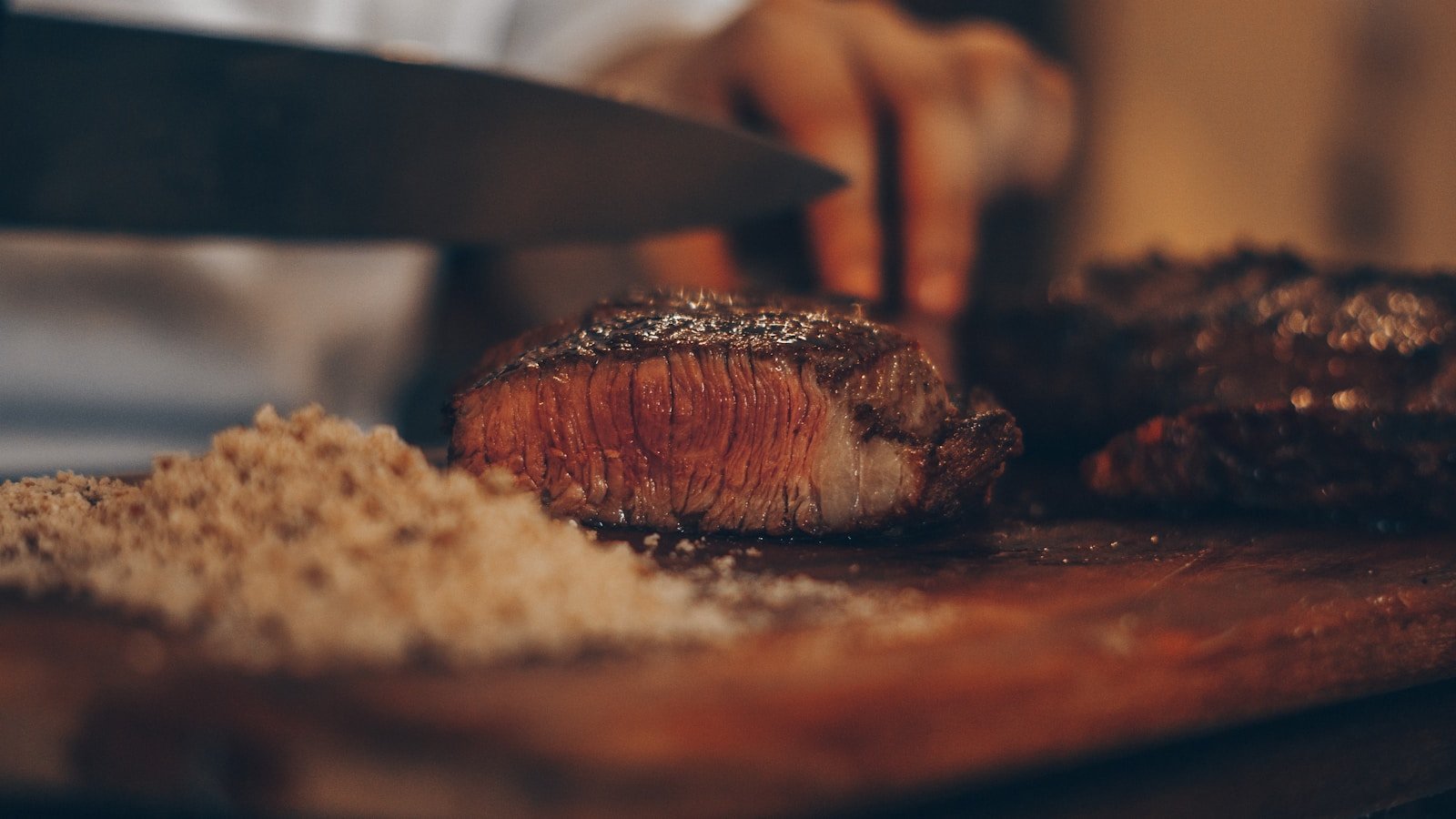
Pull the steak when it’s about five degrees below your target, since it will keep cooking from residual heat while it rests. Use these internal temperatures as your guide:
- Rare: 120 to 125 degrees
- Medium rare: 130 to 135 degrees
- Medium: 140 to 145 degrees
- Medium well: 150 to 155 degrees
- Well done: 160 degrees and up
A thermometer takes all the guesswork out of this. Cooking by time alone assumes every steak, every pan, and every stove behaves identically, and none of them do.
Step 7: Rest It Before You Cut
Let the steak rest for five to ten minutes before slicing. Cutting into it right off the heat lets all the juice run out onto the cutting board instead of staying in the meat. Resting gives the muscle fibers time to relax and reabsorb that liquid, which is the difference between a juicy steak and a dry one, even with a perfect cook.
Common Mistakes That Ruin a Cast Iron Steak
Overcrowding the pan is a big one. Two steaks in a pan that’s only sized for one will drop the temperature too much and steam the meat instead of searing it. Cook in batches if you need to. A wet steak surface, a pan that isn’t fully preheated, and constantly flipping or moving the steak all work against you the same way. Skipping the rest at the end undoes a lot of the work you just put in.
Common Questions
What’s the best oil for searing in cast iron?
Use an oil with a high smoke point, like avocado oil, refined canola, or grapeseed oil. Olive oil and butter alone will smoke and burn before the pan gets hot enough for a proper sear, though butter is great for basting once the crust is already set.
Do I need to finish thick steaks in the oven?
For steaks over an inch and a half thick, searing on the stovetop and then finishing in a 400 degree oven for a few minutes can help the inside catch up without burning the crust. This is sometimes called reverse searing when done in the opposite order, starting low in the oven and finishing with a hard sear at the end.
Can I use butter the whole time instead of oil?
Butter alone will burn before the pan is hot enough to sear properly. Start with a high smoke point oil, then add butter partway through for basting once the crust has formed.
If all of this sounds like a lot of steps for a Tuesday night, we get it. Reserve a table at Steak 38 and let us handle the flame. You handle the fork.