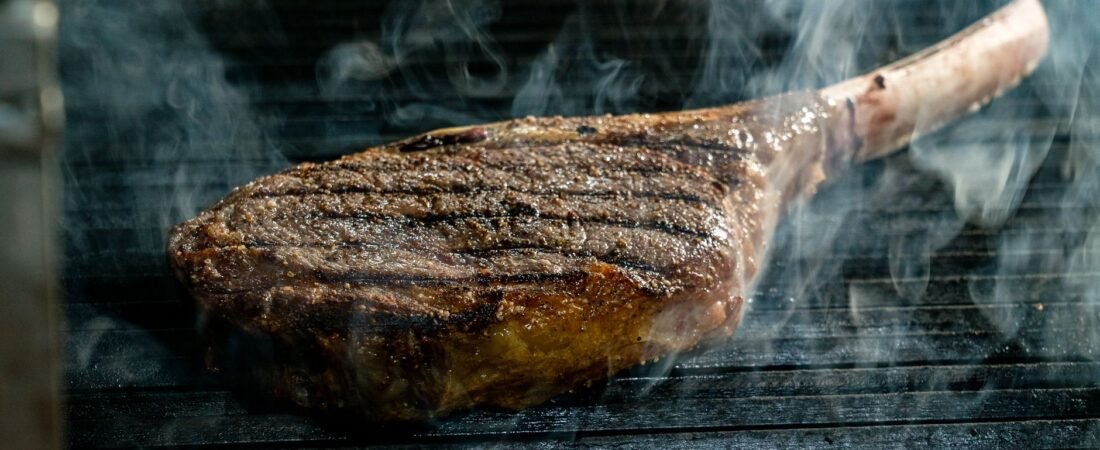
A tomahawk lands on the table and the whole room notices. That’s kind of the point. It’s not a different animal from a ribeye in terms of flavor, it’s the same rich, marbled cut, just left thicker and attached to a long, cleaned rib bone that makes it look like something off a caveman cartoon. Cooking one properly takes a slightly different approach than a normal steak, mostly because of how thick it ends up being.
What Is a Tomahawk Steak Exactly?
A tomahawk is a bone-in ribeye, cut from the same rib primal as a standard ribeye, with the rib bone left long, frenched clean of meat and fat, and trimmed to resemble the handle of an axe, which is where the name comes from. Because the bone stays attached, it’s typically cut extra thick, usually two inches or more, and can weigh anywhere from 30 to 45 ounces or more. It’s the same muscle and the same marbling as a regular ribeye. The size and presentation are what set it apart.
Why It’s Thicker Than a Normal Steak
You can’t cut a tomahawk thin, since the whole point is the long bone attached to it. That extra thickness changes how you need to cook it. A quick sear in a hot pan, the way you’d cook a one inch ribeye, will burn the outside long before the inside comes anywhere near your target temperature. Tomahawk needs a method built around that thickness, not the same approach you’d use on a normal cut.
The Best Method: Reverse Sear
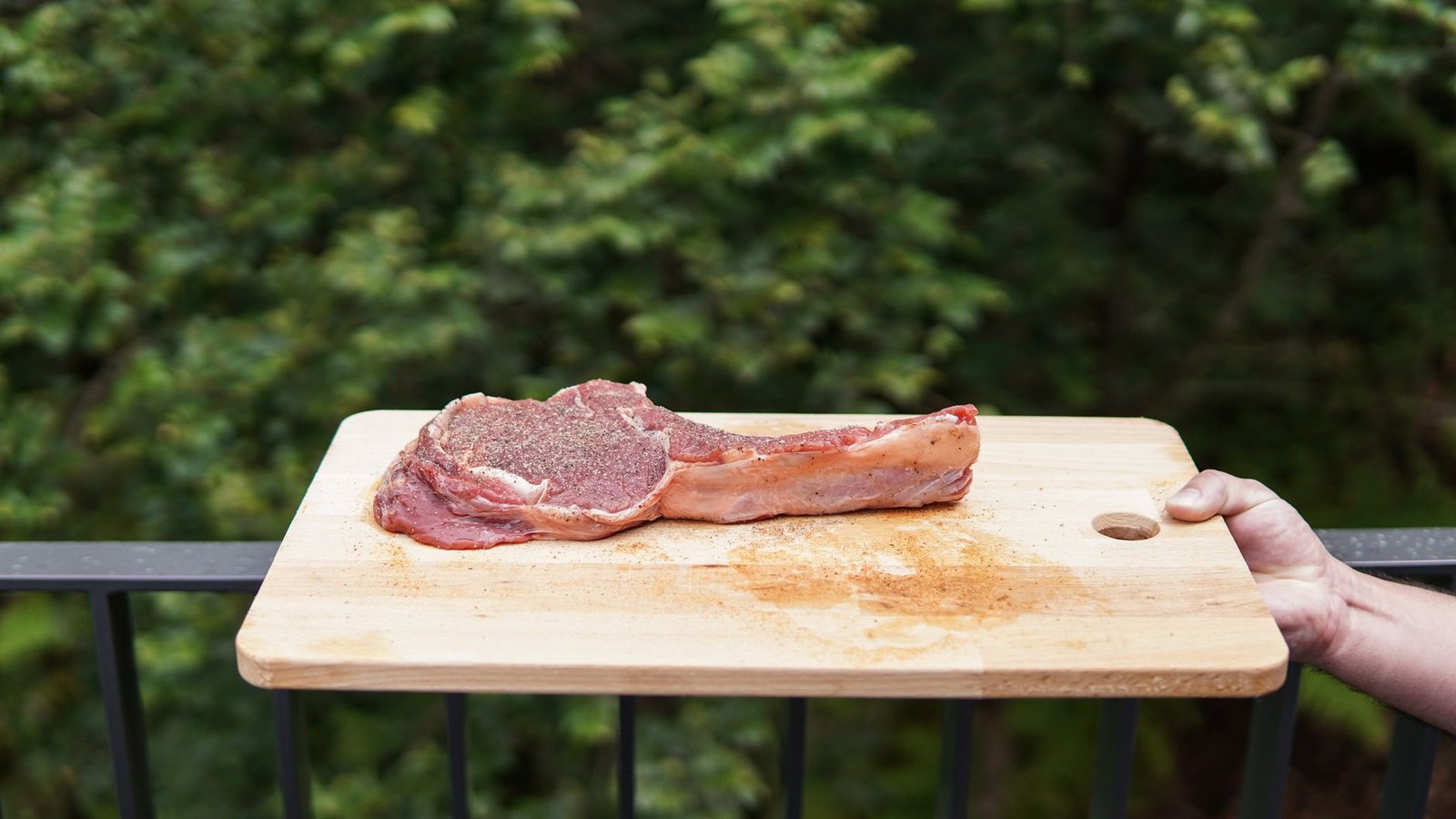
Reverse searing is the standard approach for a cut this thick, and it works better here than almost anywhere else. Instead of searing first, you cook the steak low and slow in the oven until it’s almost at your target internal temperature, then finish it with a hard, fast sear purely to build the crust. This keeps the inside from overcooking while the outside develops color, since you’re not relying on a long sear to also cook the interior.
Step by Step
Season the steak generously with salt at least an hour ahead, or overnight in the fridge uncovered if you can plan that far ahead, since the thickness benefits from a longer dry brine. Set your oven to 250 degrees and cook the steak on a rack with a thermometer probe inserted into the thickest part, away from the bone. Pull it around 115 to 120 degrees for a final medium rare result. Let it rest for about ten minutes loosely covered, then sear it hard in a screaming hot cast iron pan or over direct high heat on a grill for sixty to ninety seconds per side, just enough to build a deep crust.
Why You Should Sear the Edges Too
A tomahawk has a thick fat cap running around parts of the perimeter, similar to a ribeye’s deckle. Don’t skip searing it. Hold the steak on its edge with tongs and press it against the hot pan or grill grates for thirty seconds or so to render and crisp that fat, the same way you’d render the fat cap on a picanha or a thick pork chop. It adds real flavor and texture that gets missed if you only sear the two flat sides.
How to Carve and Serve It
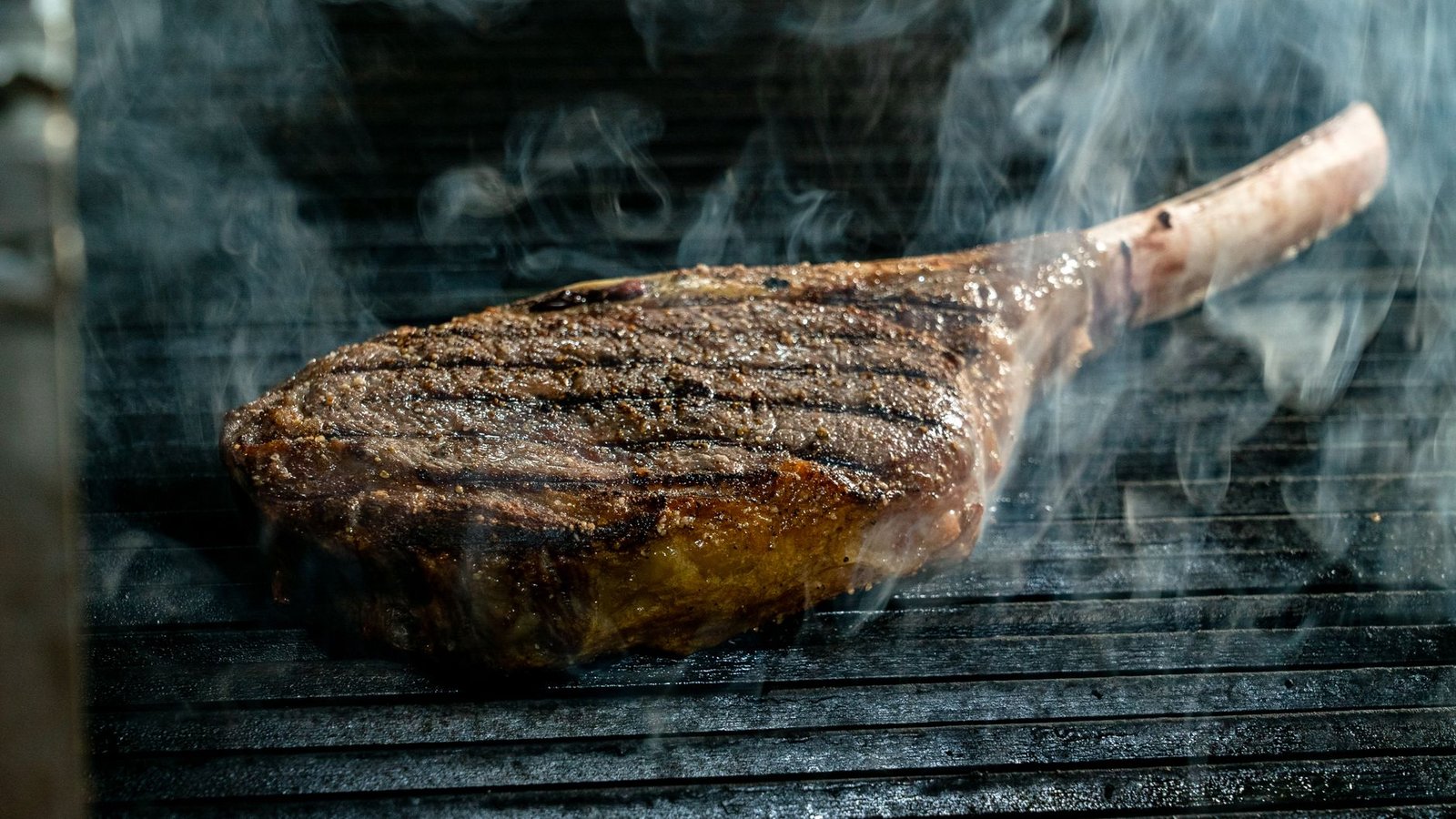
Let the steak rest again briefly after the final sear, just a few minutes. To serve, cut the meat away from the bone in one piece first, then slice it against the grain into individual portions. A tomahawk is usually large enough to serve two people comfortably, and presenting it whole at the table before slicing is part of the appeal. Save the bone. There’s usually still good meat worth gnawing off it once the slices are gone.
Choosing the Right Tomahawk at the Butcher
Look for even marbling throughout the meat, not just around the edges, and a bone that’s been cleanly frenched with no ragged meat or sinew left clinging to it. The steak itself should be a consistent thickness across its whole surface rather than tapering sharply on one side, since an uneven thickness makes it much harder to get a consistent cook from edge to edge. If you’re buying from a butcher counter rather than prepackaged, don’t hesitate to ask them to cut one fresh to the thickness you want.
Mistakes to Avoid
Trying to cook a tomahawk the same way you’d cook a normal steak is the biggest one. Skipping the reverse sear and going straight to a hot pan or grill from the start almost always ends with a burnt exterior and a cold or undercooked center. Not using a thermometer is a close second, since a cut this thick and this expensive is not the place to guess. Slicing straight across the bone instead of removing the meat first is a smaller but common mistake that makes for an awkward, uneven presentation at the table.
Common Questions
How long does a tomahawk steak take to cook?
Using the reverse sear method at 250 degrees, expect somewhere around 45 minutes to an hour in the oven before the final sear, depending on the exact thickness and weight of the steak. Go by internal temperature, not the clock.
Do I need a grill, or can I cook it entirely in the oven?
You can do the entire process indoors. A cast iron skillet gets hot enough for the final sear without needing an outdoor grill, though a grill does add a slightly different char if you have one available.
Why is tomahawk so much more expensive than a regular ribeye?
You’re paying for the same ribeye meat plus significant additional labor to french the bone cleanly, along with the novelty and presentation value of the cut. The bone itself adds weight you’re paying for without adding meat.
Want the tomahawk experience without carving one up yourself? Our 24 ounce ribeye is the same rich, marbled cut, cooked over an open flame and ready to eat the moment it hits your table. Reserve your table at Steak 38.