You’re looking at the steak section of the menu, and there they are again: strip steak and ribeye, sitting a few lines apart, both sounding like exactly what you want. If you’ve ever hesitated between the two, you’re not alone. It’s one of the most common questions we hear from guests before they even sit down.
The two cuts aren’t interchangeable. They come from different parts of the animal, look different on the plate, and reward different appetites. Here’s a straightforward breakdown to help you order with confidence next time.
The Difference at a Glance
| Ribeye | New York Strip |
|---|---|
| Cut from the rib section | Cut from the short loin |
| Heavily marbled, rich fat content | Leaner, with a fat cap along one edge |
| Softer, more buttery texture | Firmer texture with more bite |
| Rounder, irregular shape | Uniform, rectangular shape |
| Bold, rich flavor | Cleaner, more direct beef flavor |
How to Tell Them Apart on the Plate
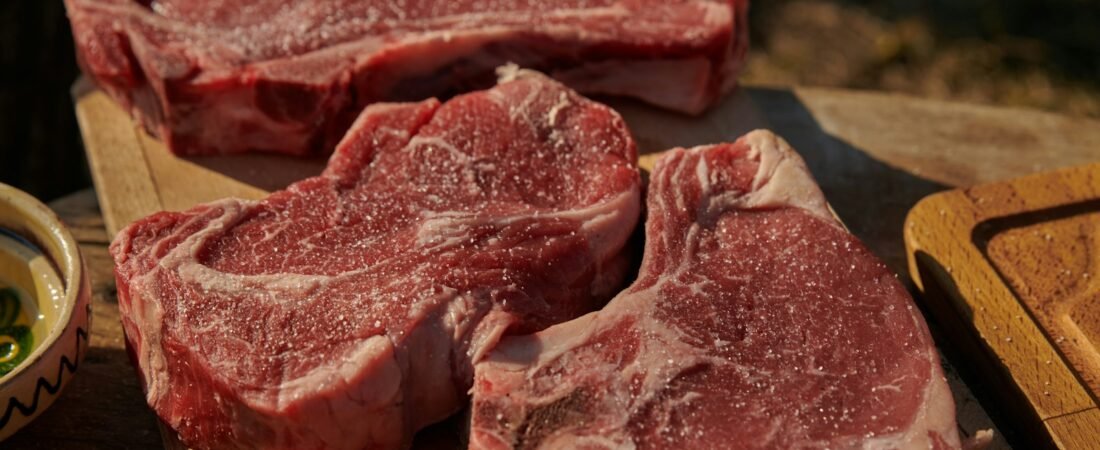
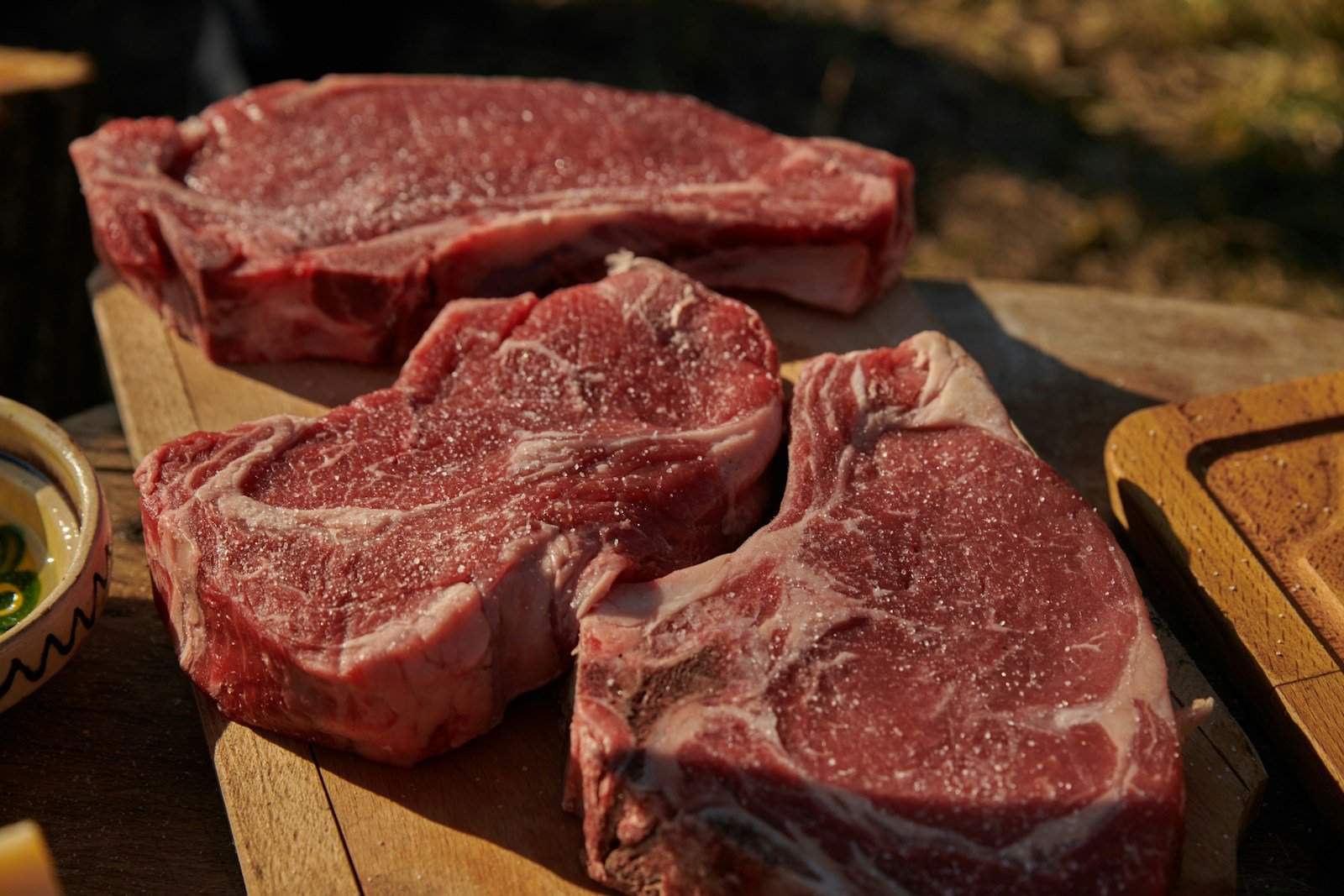
Set them side by side and the difference is obvious. Ribeye has a looser shape with visible streaks of fat running through the whole steak, plus that softer, fattier section on one edge called the deckle. It looks rich because it is rich.
Strip steak is a cleaner, more uniform cut. It usually comes with a firm strip of fat along one side, but the meat itself is noticeably leaner and holds a tighter, more even shape.
Cooking Time and the Right Temperature
Both cuts cook fast over high heat, but they behave a little differently on the grill. Ribeye’s fat content means it self-bastes as it cooks, so it stays juicy even if it sits on the heat a touch longer than planned. Strip steak has less fat to protect it, so timing matters more. Order it past medium and you’ll start losing juiciness fast.
For either cut, medium rare, around 130 to 135 degrees, is where the texture and flavor balance out best. If you like your steak more done, ribeye will forgive you more than strip will.
Portion Size and Price
Because ribeye carries more fat by weight, you’re paying for marbling along with the meat itself, which usually puts it at a slightly higher price point than a strip steak of the same size. Strip steaks tend to be a little leaner ounce for ounce, so you’re getting more pure meat per bite. Exact pricing depends on the size you order. Take a look at our entrees menu for current options.
What Pairs Well With Each
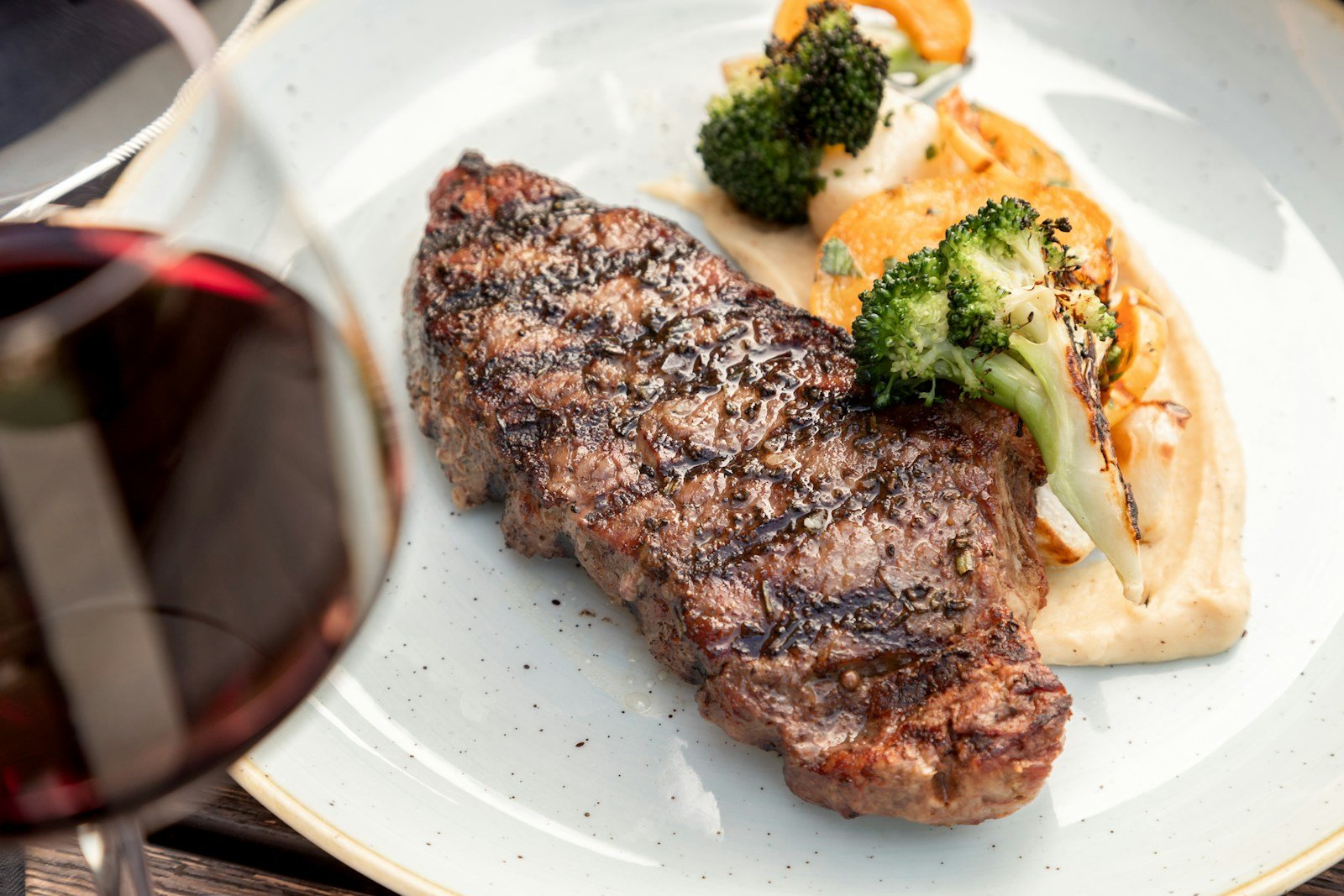
Ribeye’s richness stands up well to a bold red wine like Cabernet Sauvignon or Malbec, and it pairs naturally with sides that can match its intensity, think creamed spinach or a loaded baked potato. Strip steak’s cleaner flavor works with those same reds but also does well with something like a Chianti, and it takes nicely to a peppercorn crust or a bright chimichurri if you want a little contrast against the leaner meat.
Which One Should You Order?
If you want a rich, fatty, classic steakhouse bite, order the ribeye. If you’d rather have a leaner steak with a firmer texture and a more direct beef flavor, order the strip. Both are excellent choices, and both show up on our menu for a reason. There isn’t a wrong answer here, just a matter of what you’re in the mood for.
Common Questions
Which cut is better for someone new to steak?
Ribeye is usually the easier entry point because the extra fat makes it more forgiving and flavorful even if it’s cooked a bit past your intended temperature. Strip steak rewards a bit more precision.
Can I order either one bone in?
Ask your server about bone-in options when you visit. Availability can vary by night.
What sides go best with each?
Creamed spinach and loaded potatoes complement the richness of a ribeye, while a simple salad or grilled vegetables let a strip steak’s cleaner flavor come through.
Still not sure which one is calling your name? Book a table at Steak 38 and ask your server to help you decide when you get here.